The Best Gainsight Alternatives in 2026 (and How to Choose)
By Munish Gandhi · Founder & CEO, Statisfy
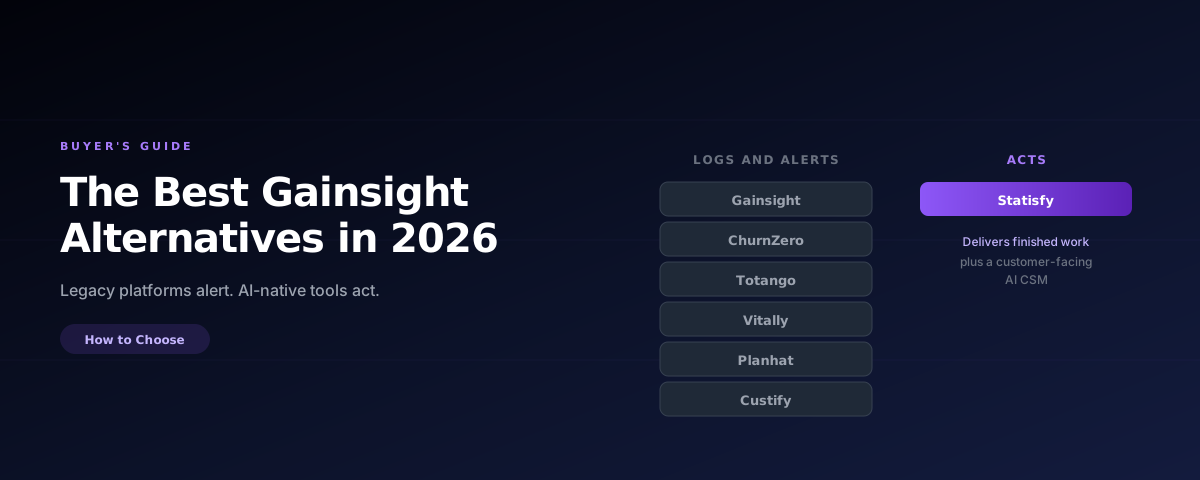
The best Gainsight alternatives in 2026 depend on what you want a tool to do. If you need a mature, configurable platform run by a dedicated CS Ops team, its closest peers are ChurnZero, Totango, Vitally, and Planhat. If you want software that does the work instead of just alerting you to it, an AI-native option like Statisfy is the newer alternative.
In one line: legacy customer success platforms log and alert. AI-native tools act and deliver finished work. Choose based on team size, config appetite, and whether you want alerts or the work done.
Disclosure: Statisfy is one of the options compared here. We describe competitors fairly, and every competitor summary below is a neutral characterization rather than a vendor claim.
Why do teams look for Gainsight alternatives?
Let us concede what Gainsight does well, because most alternatives are chasing it for good reason. Gainsight is deep, mature, and highly configurable, with a broad enterprise ecosystem and years of product hardening behind it. For a large enterprise with a dedicated CS Ops team that can own the configuration, it remains one of the most capable customer success platforms on the market.
So why do teams shop around? Three reasons come up again and again:
- Cost. Gainsight does not publish list pricing, and like most enterprise CSPs it is custom-quoted by seat and module. That makes it hard to compare without asking, so get a written quote tied to your seat count and scope before you benchmark anything.
- Implementation time. A configurable platform has to be configured. Health scores, rules, playbooks, and CTAs all have to be built before you see value, and how long that takes depends entirely on your scope. Ask for an implementation plan with dates rather than a range.
- Config maintenance. The configurability that makes Gainsight powerful also means someone has to maintain it. Playbooks, health scores, rules, and CTAs need ongoing care, which usually means CS Ops headcount.
None of these are reasons to abandon Gainsight if you have the team to run it. They are reasons to check whether a lighter or newer tool fits better.
What changed in the customer success software market in 2026?
The category split into two philosophies.
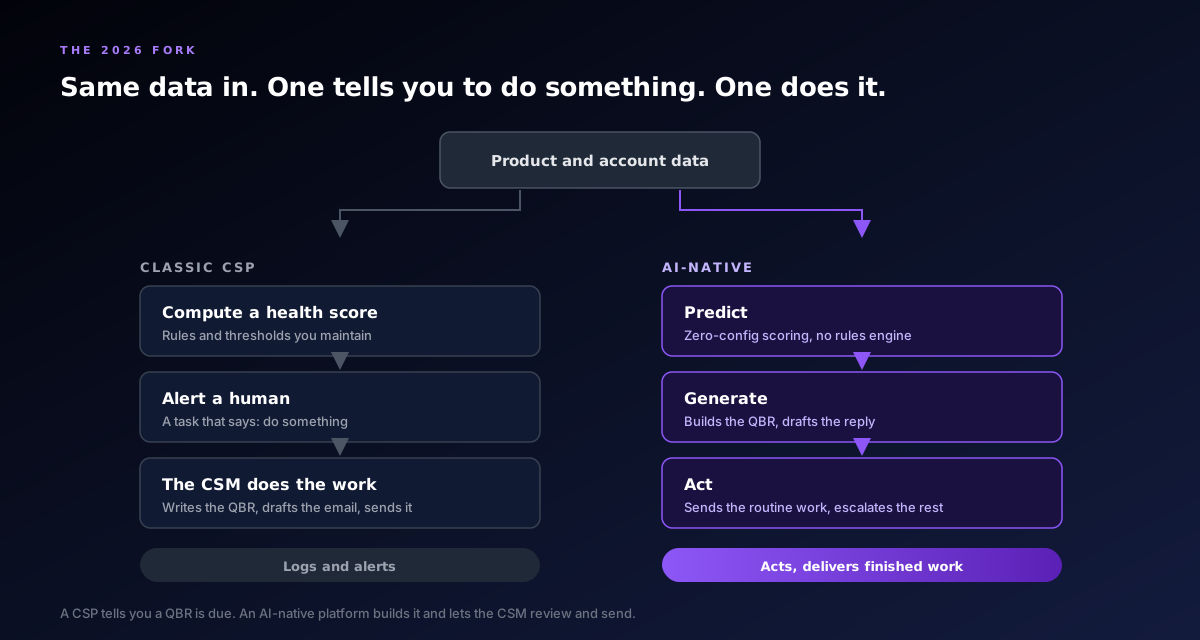
The first is the classic customer success platform (CSP): it ingests product and account data, computes a health score, and alerts a human when something needs attention. Gainsight, ChurnZero, Totango, Vitally, Planhat, and Custify all live here. They log and alert; the CSM still does the work of writing the QBR, drafting the email, and sending the renewal nudge.
The second is AI-native. Instead of handing your CSM a task that says “do something,” an AI-native tool hands them the something already built. Predict, generate, act. This is where the Statisfy AI CSM sits, and it is the structural difference behind every comparison below. A CSP tells you a QBR is due. An AI-native platform builds the QBR (Statisfy generates one in 45 seconds) and lets the CSM review and send it.
What are the best Gainsight alternatives in 2026?
Here is a fair walk through the real alternatives, each with a “best for.”
ChurnZero is a well-regarded CSP with strong playbook automation and a mid-market following. It alerts and runs playbooks well, with AI as an add-on layer on a classic CSP core. Best for: mid-market, playbook-driven teams.
Totango (now combined with Catalyst) offers a composable, module-based approach so you can adopt pieces over time. It alerts and tracks across modules. Best for: teams that want composable modules and a flexible rollout.
Vitally is popular with product-led and analytics-heavy teams for its dashboards and data views. It leans on alerts and reporting, with AI as an add-on, and configuration depth can climb as you scale. Best for: product-led, analytics-heavy teams.
Planhat is known for a strong unified data model that many teams like as a customer data backbone. It alerts and models data well. Best for: teams that want a single unified data model.
Custify is a lighter, faster-to-deploy tracker aimed at smaller teams. It keeps things simple, with limited AI. Best for: small teams that want a straightforward tracker and are happy doing outreach themselves.
Statisfy is the AI-native option here. It does not just alert; it does the work and delivers finished outputs (the QBR built, the email drafted, the reply ready). Health scoring is zero-config LLM scoring, so there is no rules engine to hand-tune, and it is multi-CRM native with Salesforce and HubSpot supported equally deeply. It goes live in 2 to 3 weeks. It also adds a layer no incumbent CSP has: the Statisfy AI CSM, a customer-facing autonomous agent across email, in-app chat, Slack, and a branded portal that handles 90 to 95% of interactions and auto-sends the routine ones, escalating 5 to 10% pre-drafted with an under-5% override rate. Best for: teams that want the work done, and autonomous long-tail coverage. On scope: Phase 1 (text) is live now; Phase 2 (audio and video) lands Q4 2026.
How do the Gainsight alternatives compare side by side?
| Platform | Category | Acts or alerts | Setup time | Config maintenance | AI-native | Best for |
|---|---|---|---|---|---|---|
| Statisfy | AI-native CSP + AI CSM | Acts, delivers finished work | 2 to 3 weeks | Low (zero-config scoring) | Yes | Teams that want the work done, and autonomous long-tail coverage |
| Gainsight | Enterprise CSP | Alerts and tracks | Varies by scope | High, needs CS Ops | Add-on | Large enterprises with a CS Ops team |
| ChurnZero | CSP | Alerts, playbooks | Medium | Medium | Add-on | Mid-market, playbook-driven teams |
| Totango (Catalyst) | CSP | Alerts, modules | Medium | Medium | Add-on | Teams wanting composable modules |
| Vitally | CSP | Alerts, dashboards | Medium | Medium to high | Add-on | Product-led, analytics-heavy teams |
| Planhat | CSP | Alerts, data model | Medium | Medium | Add-on | Teams wanting a unified data model |
| Custify | Lightweight CSP | Alerts | Fast | Low | Limited | Small teams wanting a simple tracker |
Setup time and pricing vary by vendor and by scope, so confirm both with a written quote. Competitor cells are neutral summaries, not vendor claims.
Statisfy customers point to the difference this makes: Observe.ai reported a +2% GRR lift and roughly 150 hours saved weekly, and Milestone brought churn down 15%. Numbers like these come from doing the work, not just flagging it. If you are weighing whether to buy an AI layer or build one, we cover that tradeoff in build vs buy an AI CSM. For a direct head-to-head rather than this roundup, see Statisfy vs Gainsight.
When should you NOT choose Statisfy?
We would rather you pick the right tool than the wrong one, so here is where Statisfy is not the answer.
You need a mature, highly customizable CSP run by a large CS Ops team. If your value comes from deep, bespoke configuration (intricate health-score rulesets, complex CTAs, heavily branched playbooks) and you have the headcount to own it, a mature incumbent like Gainsight is the better fit today. That configurability is a genuine strength.
You only want a lightweight, low-cost tracker and are happy doing the outreach yourselves. If all you need is a simple dashboard to watch accounts and you plan to write every email and QBR by hand, a lighter CSP like Custify will cost less and do the job.
Statisfy earns its keep when you want the work done for you and want autonomous coverage across the long tail of accounts a human team cannot reach. If neither is true, an incumbent or a lightweight tracker is the honest recommendation.
How should you choose a Gainsight alternative?
Match the tool to three things:
- Team size and CS Ops capacity. No dedicated CS Ops? Favor low-config tools (Custify for simple tracking, Statisfy for zero-config scoring). A full CS Ops team can run a configurable incumbent.
- Config appetite. If you enjoy building bespoke rules and playbooks, a configurable CSP rewards that. If config maintenance is a tax you would rather not pay, zero-config wins.
- Alerts or the work done. The real 2026 fork. If you want to be told what to do, any CSP works. If you want the QBR, email, and reply delivered ready to send, you want an AI-native platform.
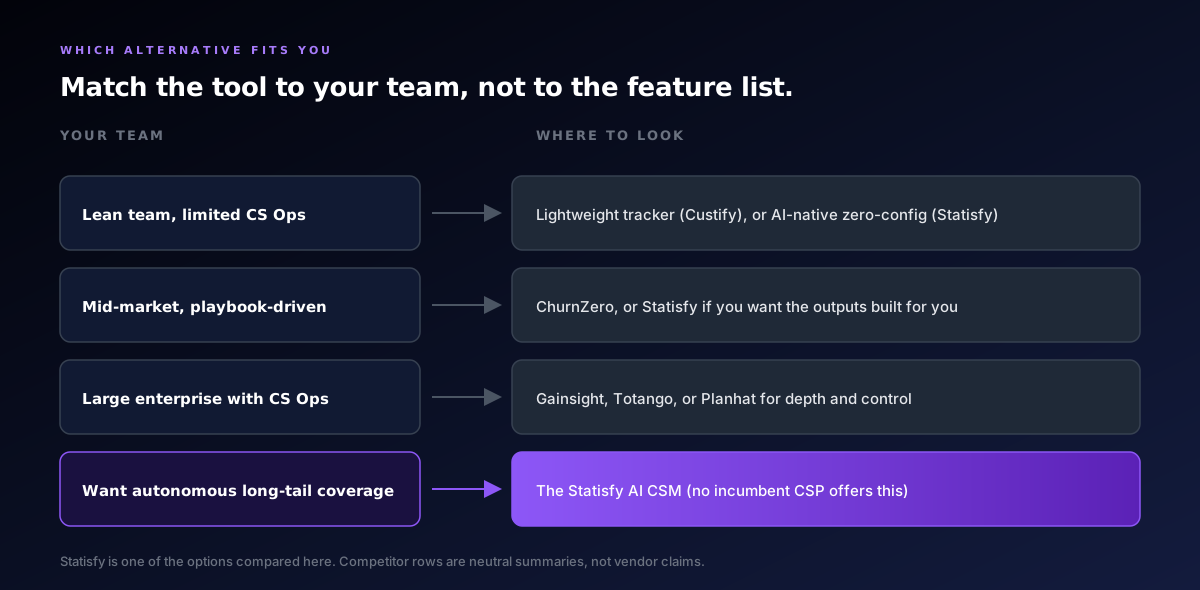
A quick decision guide:
| What does your team look like? | Where to look |
|---|---|
| Lean team, limited CS Ops | A lightweight tracker (Custify), or an AI-native tool that removes config (Statisfy) |
| Mid-market, playbook-driven | ChurnZero, or Statisfy if you want the outputs built, not just triggered |
| Large enterprise with CS Ops | Gainsight, Totango, or Planhat for depth and control |
| Want autonomous long-tail coverage | Statisfy, for the customer-facing AI CSM no incumbent CSP offers |
Compare us against your current shortlist
Bring the vendors you are evaluating. We will tell you plainly where Statisfy is the wrong choice, and where it is not.
Frequently asked questions
What is the best Gainsight alternative?
There is no single best; it depends on your needs. ChurnZero suits mid-market playbook teams, Vitally suits product-led analytics teams, and Planhat suits teams wanting a unified data model. For teams that want an AI-native tool that does the work rather than just alerting, and that adds a customer-facing AI CSM, Statisfy is the strongest fit.
How much does Gainsight cost?
Gainsight does not publish list pricing. Like most enterprise customer success platforms, it is custom-quoted by seat and module. Ask any vendor, including us, for a written quote tied to your seat count and scope, and compare total cost including implementation and any CS Ops headcount needed to maintain it.
What is an AI alternative to Gainsight?
An AI alternative to Gainsight is a platform built AI-native rather than bolting AI onto a classic CSP. Statisfy is one example: it uses zero-config LLM health scoring, generates finished work such as QBRs and drafted emails, and runs a customer-facing AI CSM that handles 90 to 95% of interactions autonomously.
How is an AI CSM different from a digital or virtual CSM?
The terms overlap in the market but differ in how they work. The Statisfy AI CSM is a customer-facing autonomous agent that auto-sends routine interactions, not just a dashboard persona.
How long does it take to switch off Gainsight?
That depends on the alternative you move to. A configurable platform has to have its health scores, rules, and playbooks built before it delivers value, so ask any vendor for an implementation plan with dates. Statisfy goes live in 2 to 3 weeks because there is no rules engine to build.
Terminology varies across this market. If the labels are what is tripping you up, we break them down in AI CSM vs digital vs virtual CSM.
See it on your own accounts
The fork that matters is alerts versus the work done. If you want to see what “the work done” looks like on real accounts, explore the Statisfy AI CSM.
About the author
 Munish Gandhi is Founder and CEO of Statisfy. He previously led customer success at Productiv and now builds AI-native CS software at Statisfy.
Compare
How Statisfy compares.
Side-by-side, parameter-by-parameter comparisons with the CS platforms teams evaluate us against.
- Statisfy vs Gainsight Rule-based CTAs vs work already drafted.
- Statisfy vs ChurnZero Plays and ChurnScores vs zero-config action.
- Statisfy vs Vitally Playbook-and-Copilot vs work that's already done.
- Statisfy vs Totango + Catalyst Three products you stitch together vs one platform that acts.
- Statisfy vs Planhat Configurable system of record vs AI-native system of action.
- Statisfy vs Hook ML alerts vs the full loop from signal to autonomous action.
- Statisfy vs Staircase AI Gainsight's communication intelligence add-on vs standalone AI-native platform.