AI CSM vs Digital CSM vs Virtual CSM
By Munish Gandhi · Founder & CEO, Statisfy
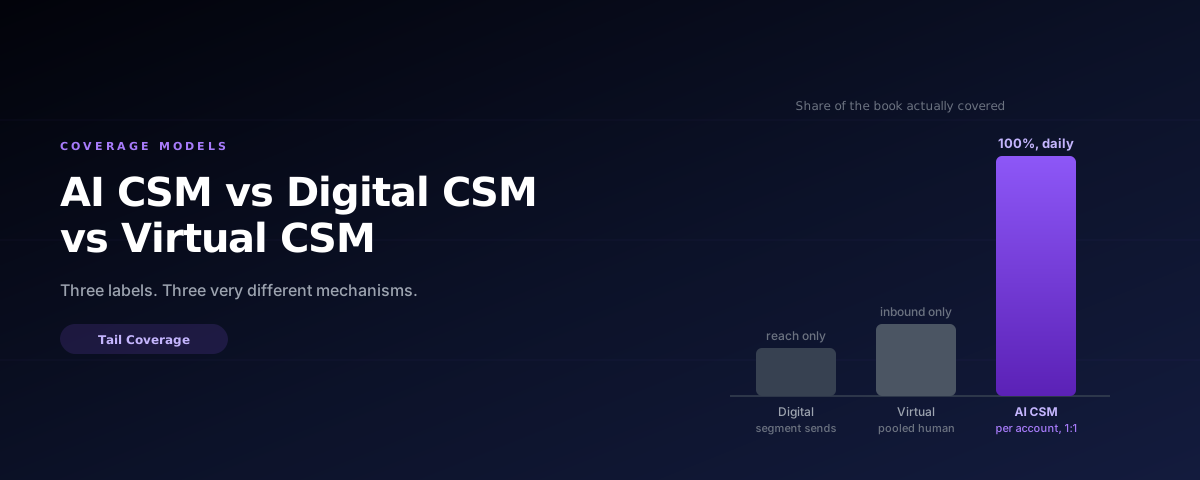
The short answer: in the AI CSM vs digital CSM comparison, the terms describe three different things. A digital CSM (tech touch) is lifecycle automation that sends to a segment. A virtual CSM is usually a human working remote or pooled across a large reactive book. An AI CSM is software that does the customer-facing CSM job autonomously, per account, across email, chat, and Slack.
Buyers use these three labels interchangeably, and the confusion costs real money at tooling-decision time. If you think you are buying dedicated per-account coverage but you are actually buying scheduled email sends, your long tail stays uncovered and you find out at renewal. This post defines each term honestly, gives you a maturity model to locate yourself, and shows the coverage math.
Why do these terms get confused?
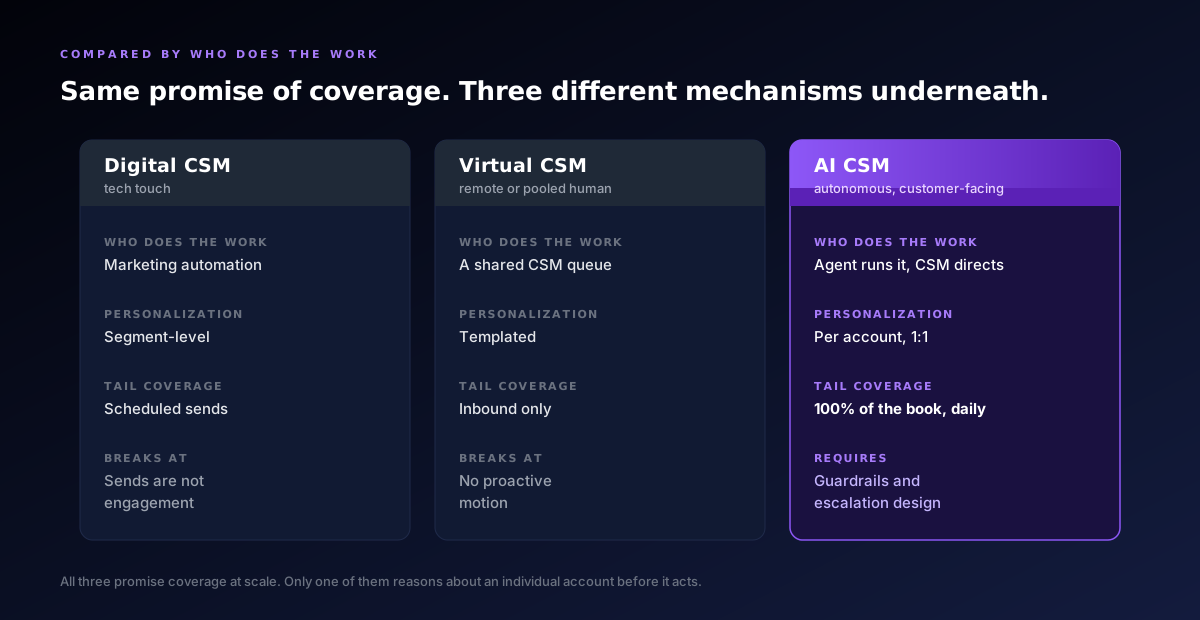
Because all three promise “coverage at scale,” but they mean very different mechanisms underneath. A demo that says “cover your whole book” could mean an email drip, an offshore pool, or an autonomous agent, and the mechanism is what determines whether your tail accounts actually get helped.
CS Ops teams pick a tool expecting reasoning per account and get segment-level sends, or staff a pooled team expecting proactive motion and get a reactive ticket queue. The label hid the mechanism.
What is a digital CSM (tech touch)?
A digital CSM is lifecycle automation: scheduled, segment-level sends that scale reach but do not reason about any individual account. This is the “tech touch CSM” model. Marketing automation or a CS platform fires onboarding emails, feature nudges, and renewal reminders based on a customer’s segment and lifecycle stage.
It is genuinely useful for reach: one workflow can touch thousands of accounts. But sends are not engagement. A digital CSM does not read a specific account’s last three tickets, notice that usage dropped 40% this month, and change what it says. It sends the same sequence to everyone in the cohort.
So when someone asks what a digital CSM is, the honest answer is automated one-to-many messaging, not per-account judgment. That is why teams pair it with a broader scaled customer success strategy rather than treating it as full coverage.
What is a virtual CSM?
A virtual CSM is usually a human: a remote or pooled CSM sharing a large, mostly reactive book of accounts. The “virtual” part refers to the delivery model (remote, often offshore, frequently pooled), not to automation. You get human judgment, which templated sends cannot match.
The limit is attention. When one pooled CSM covers 80 to 150 accounts through a shared queue, coverage becomes inbound only. The accounts that raise a hand get help. The quiet ones that are silently churning do not. There is no proactive motion because there is no time for it. This is the pooled CSM model, and it trades dedicated attention for headcount efficiency.
What is an AI CSM?
An AI CSM is software that does the customer-facing CSM job autonomously, per account, and acts across surfaces. Think of it as a digital replica of your best CSM, giving every account 1:1 coverage 24/7 across email, in-app chat, Slack, and a branded portal, in your brand’s voice. This is the definition the market is converging on: not a smarter drip, but an agent that reasons and acts per account.
The Statisfy AI CSM handles 90-95% of interactions end to end and auto-sends the routine ones. The remaining 5-10% escalate to a human with the reply already pre-drafted, so a CSM reviews rather than starts from scratch, and override rates run under 5% in deployments. It carries memory at the person, account, and org level, so it remembers who asked what and what happened last quarter, not just the current conversation window.
One boundary matters: the AI CSM is customer-facing and auto-sends the routine work, which is different from a CSM-facing copilot that drafts actions but never sends without a human click. This post is about the customer-facing model. Phase 1 (text) is live now. Audio and video are Phase 2, targeted for Q4 2026.
Key takeaways
- Digital CSM = automated sends to a segment. Scales reach, does not reason per account.
- Virtual CSM = usually a human, pooled and reactive. Judgment without dedicated attention.
- AI CSM = software that does the job autonomously, per account, across surfaces.
- Only the AI CSM reaches 100% of the book at a 1:1 level of attention.
Where does my team sit? A CS coverage maturity model
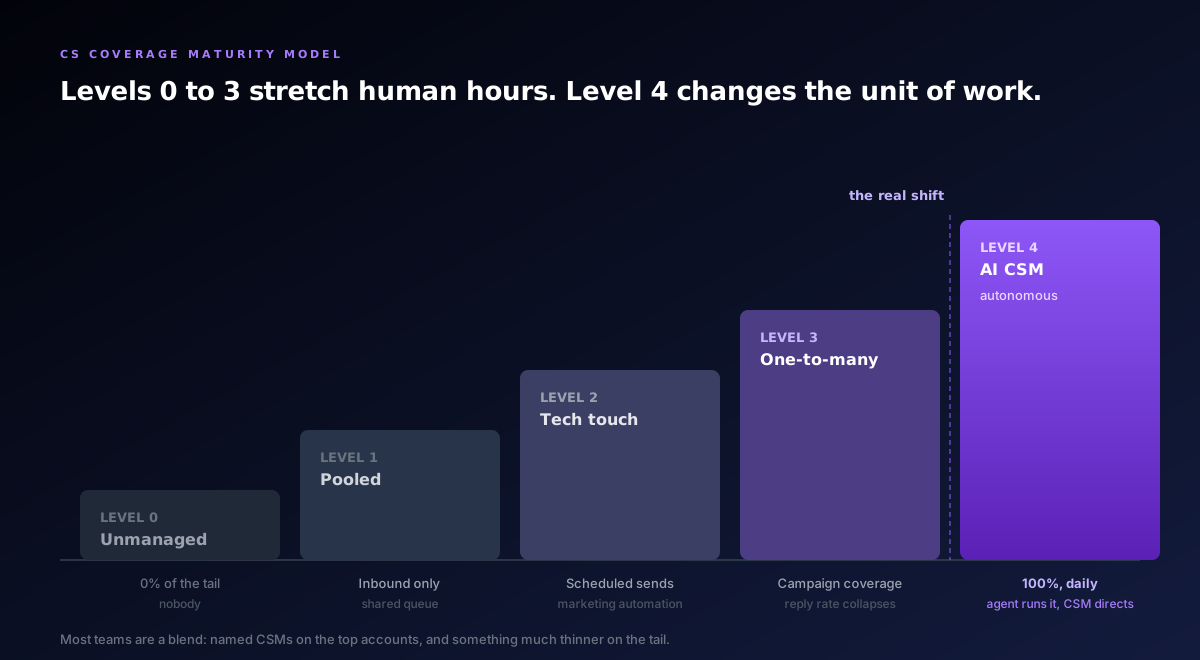
Use this model to locate your current motion, then decide what “next” looks like. Most teams are a blend, with named CSMs on top accounts and something thinner on the tail.
| Level | Model | Who does the work | Personalization | Tail coverage | Ceiling |
|---|---|---|---|---|---|
| 0 | Unmanaged | Nobody | None | 0% | Churn invisible until renewal |
| 1 | Pooled and reactive (a “virtual CSM” pool) | Shared CSM queue | Templated | Inbound only | No proactive motion |
| 2 | Tech touch (“digital CSM”) | Marketing automation | Segment-level | Scheduled sends | Sends are not engagement |
| 3 | One-to-many orchestrated | CS Ops builds playbooks | Cohort-level | Campaign coverage | Reply rate collapses on the tail |
| 4 | Autonomous (AI CSM) | Agent runs it, CSM directs | Per account, 1:1 | 100%, daily | Requires guardrails and escalation design |
The jump from Level 3 to Level 4 is the real shift. Levels 1 through 3 all try to stretch scarce human hours further. Level 4 changes the unit of work: the agent runs the account and the CSM directs the agent.
What does the coverage-and-cost math look like?
When you model coverage against cost, the tail is where every human-hours model breaks. The table below is an analytical model, not measured results, meant to show the shape of the tradeoff. Relative cost per account is a labeled modeling assumption, not a benchmark from your book.
| Coverage model | Accounts per CSM | Tail touch frequency | Risk detection lag | Relative cost per account (model) | Breaks at |
|---|---|---|---|---|---|
| Named CSM | 20-40 | Weekly to monthly | Days | 1.0x (highest) | Any book past the top 20% |
| Pooled CSM | 80-150 | Reactive only | Weeks | ~0.4x | Personalization collapses |
| Tech touch | 500+ | Scheduled sends | At renewal | ~0.15x | One-to-many, no account context |
| AI CSM | Whole book, 1:1 | Daily, per account | Signal-time | 0.10-0.20x | Needs guardrails and escalation design |
Read the “breaks at” column first. Named CSMs deliver the highest-quality attention at the highest cost, which is why they are rationed to the top of the book. Pooled and tech-touch models are cheaper but lose either personalization or account context. In this analytical model, the AI CSM lands at roughly 10 to 20% of the cost per account of a named CSM while touching the whole book daily. Treat those multipliers as a model, then validate against your own numbers.
See where your book actually sits
Most teams find their tail is one level lower than they thought. Walk the maturity model against your own account list.
Why is the AI CSM the only model that covers the whole book at 1:1?
Because it is the only model where coverage stops being a headcount problem and becomes a software one. Every human model forces the same weekly rationing decision: which accounts get attention this week, and which wait. Adding headcount does not fix it, because new logos keep landing in the long tail faster than you can hire. The 1:200 ratio does not become 1:1 by hiring. It becomes 1:1 when one agent can run every account at once.
The AI CSM reasons per account, acts across surfaces, and escalates the 5-10% that genuinely need a human with the draft already written. That is what delivers 100% coverage at a 1:1 level of attention instead of a scheduled send. It is the core of modern digital customer success, and how teams finally cover their long-tail accounts without a hiring plan.
Reported outcomes from Statisfy deployments include +2-5% NRR and 5-10x effective capacity per CSM, plus named results: +2% GRR and roughly 150 hours saved weekly at Observe.ai, and a 15% churn reduction at Milestone. In one Vitally migration, playbooks collapsed from 60 to 11 in about two weeks. Churn-prediction accuracy runs at 87.5%, and most teams deploy in two to three weeks across 50-plus integrations.
If you are weighing whether to assemble this yourself, the harness around the model is the hard part. That teardown is in build vs buy an AI CSM.
Frequently asked questions
Is a digital CSM the same as an AI CSM?
No. A digital CSM (tech touch) sends scheduled, segment-level messages through automation and does not reason about individual accounts. An AI CSM is software that does the CSM job autonomously per account, reads each account's context, acts across email, chat, and Slack, and escalates edge cases to a human. Sends are not engagement; the AI CSM engages.
Is a virtual CSM a person or software?
Usually a person. Virtual CSM typically means a human CSM working remotely or pooled across a large, reactive book of accounts. You get human judgment but not dedicated per-account attention, because one pooled CSM may cover 80 to 150 accounts through a shared queue. An AI CSM, by contrast, is software that covers the whole book at a 1:1 level.
What does AI CSM mean?
An AI CSM is a customer-facing autonomous agent that performs the customer success manager job per account, 24/7, across email, in-app chat, Slack, and a branded portal. It handles 90-95% of interactions end to end, auto-sends the routine ones, and escalates 5-10% to a human with the reply pre-drafted. It carries person, account, and org-level memory.
Does an AI CSM replace human CSMs?
No. It changes the unit of work. The agent runs routine coverage across the whole book while CSMs direct the agent and own the 5-10% of high-stakes, low-confidence, or policy-scope interactions that escalate. Override rates run under 5%. Humans move from doing every send to setting strategy, handling exceptions, and managing the top relationships.
When should I not use an AI CSM?
If your entire book is a handful of strategic accounts that each warrant a full-time named CSM, autonomous coverage adds less. The AI CSM earns its keep when you have a long tail that humans cannot reach: hundreds or thousands of accounts getting a newsletter and a renewal notice today. It also requires guardrails and escalation design to run well.
Which one gives full account coverage?
Only the AI CSM extends dedicated, personalized motion to 100% of accounts without proportional hiring.
See what 1:1 coverage looks like on your book
The label matters less than the mechanism. If your tail accounts are getting scheduled sends and inbound-only support, you do not have coverage, you have reach. See what 1:1 coverage looks like on your book with the Statisfy AI CSM, or read more on how to scale customer success.
About the author
 Munish Gandhi is Founder and CEO of Statisfy. He previously led customer success at Productiv and has spent his career on the operational side of CS.