CSM Coverage Ratio: How Many Accounts Can One CSM Manage?
By Munish Gandhi · Founder & CEO, Statisfy
Manually, a CSM can realistically manage 20-40 enterprise accounts, 50-150 mid-market, or a few hundred in a tech-touch or pooled model, and those ranges have held for years because a human runs out of hours. But the account count is a misleading metric. The more honest number is coverage: even a CSM with 100 accounts is giving real, proactive attention to maybe the top 20%. With an AI CSM handling monitoring, scoring, and drafting, the ceiling changes. One person can cover 100% of their book instead of the top fifth, because the repetitive work no longer competes for their time.
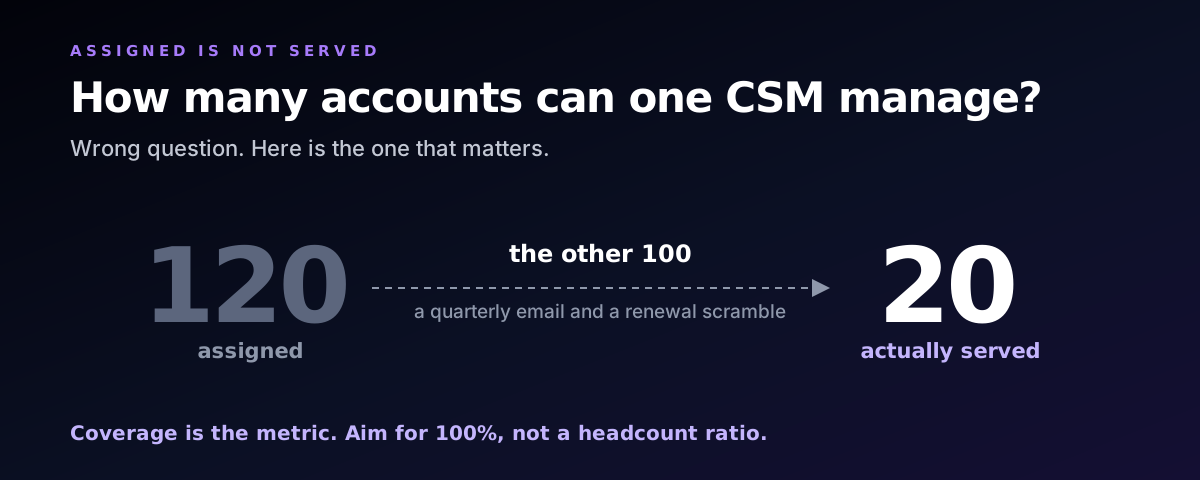
Stop benchmarking your team on accounts-per-CSM. The traditional ratios measure accounts assigned, not accounts served, and the gap between the two is where churn quietly starts. A CSM “managing” 120 accounts is proactive on maybe 20 and reactive on the other 100. The real 2026 metric is the share of your book getting proactive attention this quarter. Aim for 100%, not a headcount ratio.
Every few weeks someone asks how many accounts a CSM can manage, and the answers come back in the same familiar ranges. Those numbers have barely moved in a decade because they are bounded by a hard limit: the hours in a human’s week. Here is why the ratio misleads, and what to measure instead.
Key takeaways
- Traditional ranges: ~20-40 high-touch enterprise, ~50-150 mid-market, a few hundred for tech-touch or pooled.
- There is no universal ideal ratio. It depends on ACV, product complexity, and touch model.
- The ratio measures accounts assigned, not served. A CSM with 120 accounts is proactive on maybe 20% of them.
- Coverage is the real metric. The gap between assigned and served is where churn starts.
- AI changes the ceiling. When agents absorb monitoring, scoring, and drafting, effective capacity rises 5-10x and coverage reaches 100% of the book, with a human approving customer-facing actions at an override rate under 5%.
What is a realistic CSM-to-account ratio?
A realistic manual CSM-to-account ratio is about 20-40 high-touch enterprise accounts, 50-150 mid-market, or a few hundred in a tech-touch or pooled model. Those ranges have held for years because a human simply runs out of hours.
They are not just folklore, either. Gainsight’s own benchmarking lands in the same place: an average of 22 accounts in high-touch programs, 49 in mid-touch, and 144 in low-touch.
| Segment / touch model | Typical accounts per CSM | Bounded by |
|---|---|---|
| High-touch enterprise | ~20-40 | Depth of relationship and renewal complexity |
| Mid-market | ~50-150 | Mix of proactive motion and reactive support |
| Tech-touch / pooled | A few hundred to thousands | Mostly automated, light human touch |
These are useful reference points for staffing, but treat them as accounts assigned, not accounts served. That distinction is the whole argument.
Why is the account-count ratio misleading?
The ratio is misleading because it counts accounts assigned to a CSM, not accounts that actually get proactive attention. Nick Mehta of Gainsight has made a version of this point himself, calling the ideal-ratio question “such a simple question, yet such a complex answer,” because it depends on ACV, product complexity, and touch model. That is right, and there is a bigger problem underneath it.
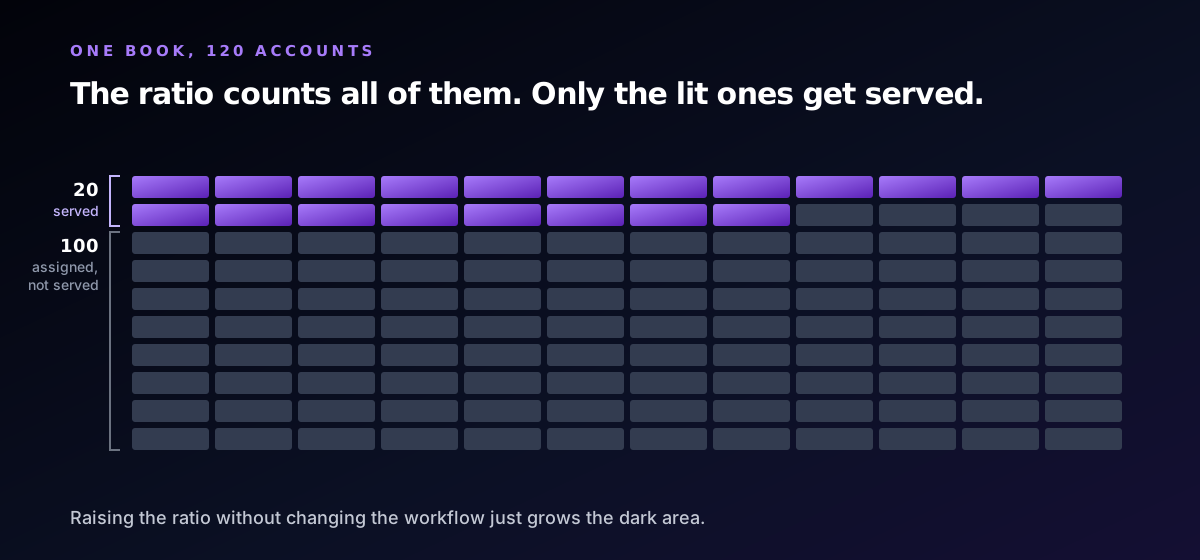
A CSM “managing” 120 accounts is usually proactive on the top 20 and reactive on the other 100. We have all quietly accepted that the top 20% of a book gets attention and the long tail gets a quarterly email and a renewal scramble. Raising a CSM’s account count without changing the workflow does not scale the team. It just grows the ignored pile, where silent churn and missed expansion hide.
What is CSM coverage, and why does it matter more than ratio?
Coverage is the share of your book that gets proactive attention, and it matters more than the ratio because the gap between assigned and served is where churn lives. The question is not “how many accounts fit on a spreadsheet,” it is “how many get proactive attention.”
This reframes the entire staffing conversation. If a CSM is assigned 120 accounts but serves 20, the answer is not to lower the ratio to 60 and still serve 20. It is to change the workflow so that all 120 get monitored. A ratio improvement that does not move coverage is theater. This is the same insight that reshapes the future of the customer success career: the work stops being about how many accounts you can hold and starts being about how many you can actually serve.
How does AI change the coverage ceiling?
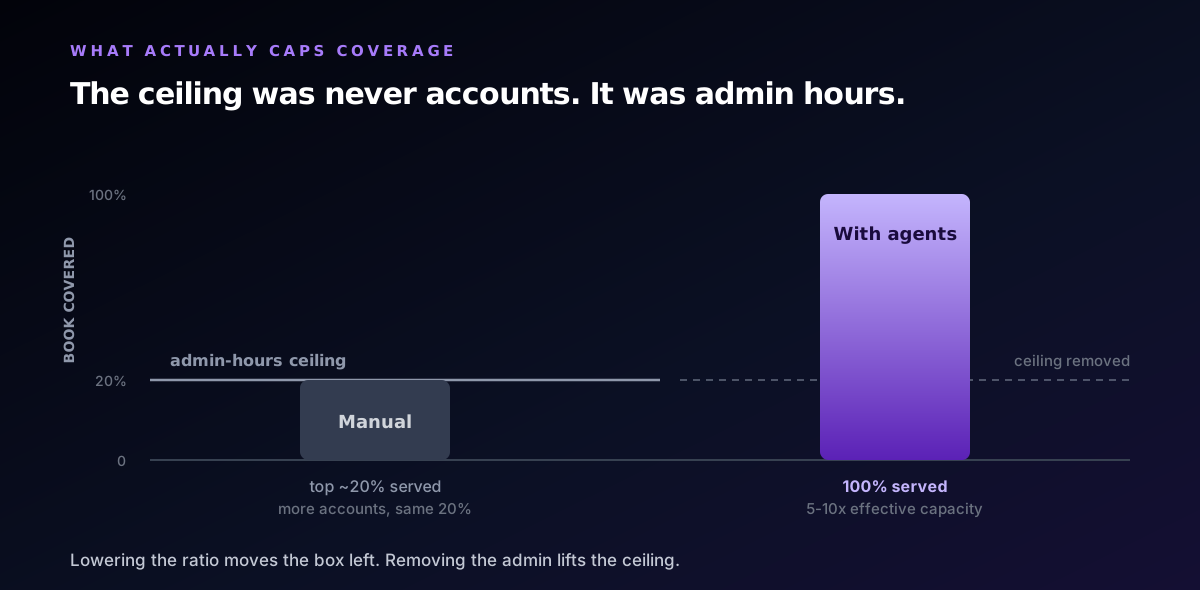
AI changes the ceiling by removing the admin hours that capped capacity, so a CSM can cover 100% of the book instead of the top 20%. When agents handle the repetitive layer, capacity is no longer bounded by how many QBRs a person can build in a week.
Statisfy monitors nine signals per account, scores risk (87.5% of accounts flagged with negative health churn within 90 days), drafts the next action such as a QBR in about 45 seconds, and routes it to a human to approve, with override rates under 5%. The effect is 5-10x effective capacity per CSM and coverage across 100% of the book, not just the top 20%.
The account count on the spreadsheet can go up, but more importantly the served count catches up to the assigned count. That is the number worth reporting to your board. For the team-structure version of this shift, see the AI CSM pod model, and for scaling without linear hiring, how coverage grows without headcount.
See your real coverage, assigned versus served
Bring your account count and your team size. The gap is usually wider than the ratio suggests.
Frequently asked questions
What is a good CSM-to-account ratio in 2026?
There is no universal number; it depends on ACV, product complexity, and touch model. As a manual reference, expect ~20-40 high-touch enterprise, ~50-150 mid-market, or a few hundred for tech-touch or pooled. The better target is coverage: what share of your book gets proactive attention? Aim for 100%, not a headcount ratio.
How many accounts can a CSM handle with AI?
Effective capacity rises 5-10x when agents absorb monitoring, scoring, and drafting, so a CSM can genuinely cover their full book rather than the top 20%. The exact number still depends on account complexity, but the constraint shifts from admin hours to judgment, and coverage reaches 100% with a human approving customer-facing actions.
Does a higher account count hurt retention?
Only if coverage drops. Adding accounts without offloading busywork degrades service on the long tail, where churn usually starts. If AI agents keep every account monitored and drafted for, a higher assigned count can coexist with better retention because served coverage stays at 100%.
What is the difference between accounts assigned and accounts served?
Accounts assigned is how many are on a CSM's book; accounts served is how many actually get proactive attention. The traditional ratios measure the first and ignore the second. A CSM assigned 120 accounts often serves 20. Closing that gap, not lowering the ratio, is what actually protects retention.
See your real coverage
Stop benchmarking your team on accounts-per-CSM and start measuring the share of your book getting proactive attention. Want to see your real coverage today, assigned versus served? See it on live accounts with the Statisfy AI CSM.
About the author
 Munish Gandhi is Founder and CEO of Statisfy, and previously led customer success at Productiv. He writes on customer success as an accountability function and how AI reshapes the operating model of a CS team.
Compare
How Statisfy compares.
Side-by-side, parameter-by-parameter comparisons with the CS platforms teams evaluate us against.
- Statisfy vs Gainsight Rule-based CTAs vs work already drafted.
- Statisfy vs ChurnZero Plays and ChurnScores vs zero-config action.
- Statisfy vs Vitally Playbook-and-Copilot vs work that's already done.
- Statisfy vs Totango + Catalyst Three products you stitch together vs one platform that acts.
- Statisfy vs Planhat Configurable system of record vs AI-native system of action.
- Statisfy vs Hook ML alerts vs the full loop from signal to autonomous action.
- Statisfy vs Staircase AI Gainsight's communication intelligence add-on vs standalone AI-native platform.